|
From slave narratives and great revolutionary documents to the world-changing philosophies of Thoreau, Paine, Machiavelli, and Plato, you can enjoy low prices on these timeless classics. Interested in receiving a copy of the Dover Literature & Humanities Catalog? Click here to sign up for our catalog mailing list. Buy More, Save More: Save 10% when you purchase 10 or more of the same title. Great for book clubs, classrooms, and more!
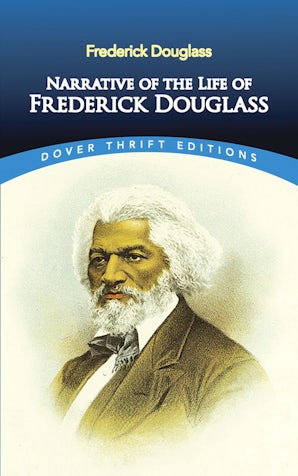
Recommendations... Narrative of the Life of Frederick Douglass by Frederick Douglass The impassioned abolitionist and eloquent orator provides graphic descriptions of his childhood and horrifying experiences as a slave as well as a harrowing record of his dramatic escape to the North and eventual freedom. A selection of the Common Core State Standards Initiative.
|  |
|  | Walden; Or, Life in the Woods by Henry David Thoreau Accounts of Thoreau's daily life on the shores of Walden Pond outside Concord, Massachusetts, are interwoven with musings on the virtues of self-reliance and individual freedom, on society, government, and other topics. A selection of the Common Core State Standards Initiative.
|  |
|
Great Speeches by African Americans: Frederick Douglass, Sojourner Truth, Dr. Martin Luther King, Jr., Barack Obama, and Others by James Daley Tracing the struggle for freedom and civil rights across two centuries, this anthology comprises speeches by Martin Luther King, Jr., Marcus Garvey, Malcolm X, Barack Obama, and many other influential figures. Includes 2 selections from the Common Core State Standards Initiative.
|  |
|  | Great Speeches by Native Americans by Bob Blaisdell These 82 speeches encompass 5 centuries of Indian encounters with nonindigenous peoples. Speakers include Chief Joseph, Sitting Bull, Tecumseh, Seattle, Geronimo, Crazy Horse, and many lesser-known leaders.
|  |
|
|  | Nature and Other Essays by Ralph Waldo Emerson A soul-satisfying collection of 12 essays by the noted philosopher and poet who embraced independence, rejected conformity, and loved nature. Includes the title essay, plus "Character," "Intellect," "Spiritual Laws," "Circles," and others.
|  |
|
|
Products in Non-Fiction |  |  |  | The Analects by Confucius Rich distillation of the timeless precepts of extremely influential Chinese philosopher and social theorist. Includes "Concerning Fundamental Principles," "Concerning Government," "The Eight Dancers: Concerning Manners and Morals," and much more. Footnotes.
|
|  | Apologia Pro Vita Sua by John Henry Newman The spiritual autobiography of an influential Church of England vicar who converted to Roman Catholicism. The Apologia employs flowing, conversational prose to explore the very depths and nature of Christianity.
|
|  | The Autobiography of Benjamin Franklin by Benjamin Franklin Charming self-portrait covers boyhood, work as a printer, political career, scientific experiments, much more. Its openness, honesty, and readable style have made the Autobiography one of the great classics of the genre.
|
| |  | The Birth of Tragedy by Friedrich Nietzsche Philosopher's classic study declares that Greek tragedy achieved greatness through a fusion of elements of Apollonian restraint and control with Dionysian components of passion and the irrational.
|
|  | Book of African-American Quotations by Joslyn Pine This original collection of quotations cites approximately 100 well-known African Americans from all walks of life, including Maya Angelou, Louis Armstrong, Muhammad Ali, Julian Bond, George Washington Carver, Frederick Douglass, and Ralph Ellison.
|
|  | Books and Reading: A Book of Quotations by Bill Bradfield Over 450 memorable quotes from writers, political figures, and celebrities with provocative declarations from Mark Twain, Virginia Woolf, Andrew Carnegie, Theodore Roosevelt, and Oprah Winfrey, among others.
|
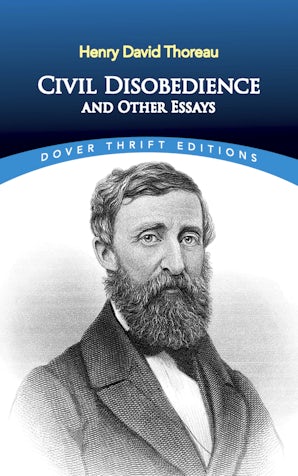
|  | Civil Disobedience and Other Essays by Henry David Thoreau Representative sampling of Thoreau's most frequently read and cited essays: "On the Duty of Civil Disobedience" (1849), "Life without Principle" (1863), "Slavery in Massachusetts" (1854), "A Plea for Captain John Brown" (1869) and "Walking" (1862).
|
|  | Common Sense by Thomas Paine First published in January of 1776, this highly influential landmark document clearly and persuasively argued for American separation from Great Britain and paved the way for the Declaration of Independence. A selection of the Common Core State Standards Initiative.
|
|  | The Communist Manifesto and Other Revolutionary Writings: Marx, Marat, Paine, Mao Tse-Tung, Gandhi and Others by Bob Blaisdell Concise anthology presents broad selection of writings: Declaration of Independence, Declaration of the Rights of Man, Communist Manifesto, plus works by Lenin, Trotsky, Marat, Danton, Rousseau, Gandhi, Mao, other leading figures in revolutionary thought. Includes a selection from the Common Core State Standards Initiative.
|
|  | The Confessions of St. Augustine by St. Augustine Influential work recalls author's mid-4th-century origins in rural Algeria; lavish lifestyle in Milan; his struggle with sexual desires; eventual renunciation of secular ambitions and marriage; and recovery of his Catholic faith.
|
|  | Confessions of an English Opium Eater by Thomas De Quincey Impressive account of the author's early years as a precocious student, his adventures among the outcasts of London, studies at Oxford University, introduction to opium in 1804 and his longterm involvement with the drug.
|
|  | Dark Night of the Soul by St. John of the Cross In this spiritual masterpiece — a classic of Christian literature and mysticism — the author addresses pride, avarice, envy, and other human imperfections, describing methods of conversion through prayer, submission, and purification.
|
|  | De Profundis by Oscar Wilde While imprisoned, Wilde wrote this long letter of recrimination to his lover, Lord Alfred Douglas. It offers fascinating insights into Wilde's life in prison and the background and psychology of a notorious affair.
|
| |  | The Devil's Dictionary by Ambrose Bierce Over 1,000 barbed and brilliant definitions. Congratulations are "the civility of envy," a historian is a "broad-gauged gossip," many more. H. L. Mencken called these "some of the most gorgeous witticisms in the English language."
|
|  | Discourse on the Origin of Inequality by Jean-Jacques Rousseau A powerful, passionate explanation of the roots of social inequality, Rousseau's Discourse influenced virtually every major philosopher of the Enlightenment. It remains among the 18th-century's most provocative and frequently studied works.
|
|  | Enchiridion by Epictetus, George Long A first-century Stoic, Epictetus argued that we will always be happy if we learn to desire that things should be exactly as they are. His Enchiridion distills his teachings to illuminate a way to a tranquil life.
|
|  | The Epistles of Paul and Acts of the Apostles by St. Paul Reproduced from the King James Version of the New Testament, this volume features Romans, discussing Christian life and theology, and Acts, recounting the early days of the church.
|
|  | Food and Drink: A Book of Quotations by Susan L. Rattiner Scores of humorous, frequently incisive remarks by famous writers, humorists, and celebrities, including W. K. Chesterton, W. C. Fields, Julia Child, Marilyn Monroe, George Bernard Shaw, Robert Morley, and many more.
|
|
|
|
 |